
Brake and Tire Warning Signs Every Yonkers Driver Should Know
Squealing, grinding, pulling or a tire pressure light? Here is what the most common brake and tire warning signs usually mean, and when to bring your car in.
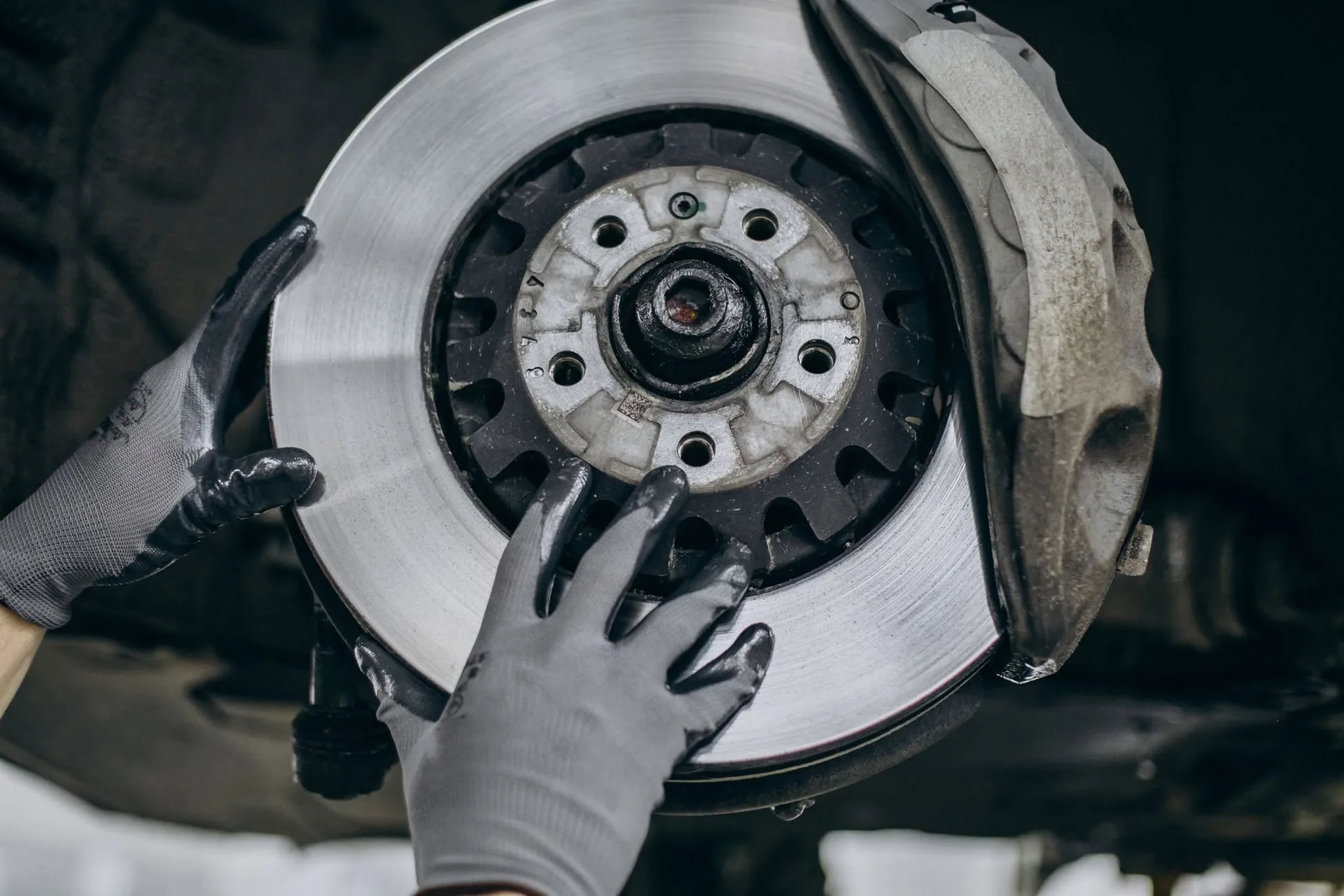
Your brakes and tires do more work than almost any other part of your car, and they do it quietly. Every stop at a red light on Central Park Avenue, every merge onto the Saw Mill, and every pothole on a side street in the Bronx puts wear on the same handful of parts. Most of the time you never think about them. Then one morning the pedal feels soft, the steering wheel starts to shake at highway speed, or a little orange light pops up on the dash, and you are left wondering how serious it really is.
At Milad Nukho and Sons, brake and tire work comes through our four bays every day, and we have been doing it at the same Yonkers location since 1981. This guide walks through the warning signs we see most often, what each one usually means, and when it is time to bring your car in. The goal is simple: to help you catch a small problem while it is still small.
Why brakes and tires belong in the same conversation
It is easy to think of brakes and tires as two separate jobs, but they work as a team. Your brakes slow the wheels down; your tires are what actually grip the road and turn that braking force into a stop. Worn tires make good brakes less effective, and a sticking brake can wear a tire unevenly. On top of that, both systems are connected to your suspension. A worn suspension component can cause uneven tire wear and make a car pull under braking, so a symptom that looks like a tire problem can have its root somewhere else entirely.
That is why we look at both systems together whenever a car comes in with a complaint in either one. It is also why, if you are noticing more than one of the signs below, it makes sense to have everything checked in the same visit.
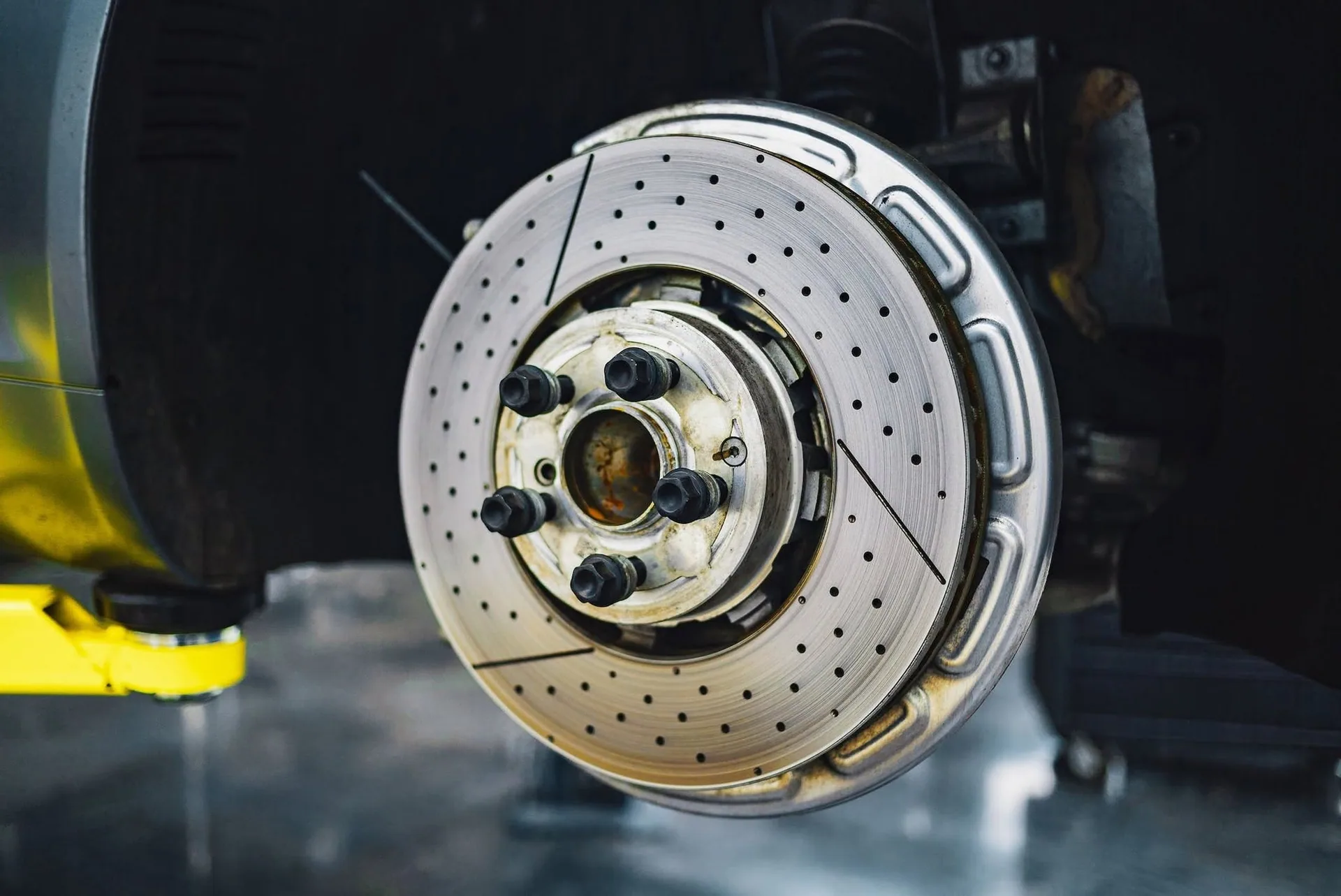
Brake warning signs you should never ignore
Squealing or squeaking when you stop
A high-pitched squeal is often the first sign that your brake pads are getting thin. Many pads have a small metal tab built in for exactly this reason: when the friction material wears down far enough, the tab touches the rotor and makes noise to get your attention. Squealing can also come from dust, moisture or glazing, but it is always worth a look. Caught at this stage, the job is usually a straightforward brake pad replacement.
Grinding or a metal-on-metal sound
Grinding is more serious. It usually means the pad material is gone and metal is now rubbing against the rotor. Every stop at that point is cutting into the rotor itself, which is how a pad job turns into a brake rotor replacement as well. If you hear grinding, book your car in soon rather than waiting until the weekend after next.
A pulsing or vibrating brake pedal
If the pedal pulses under your foot or the steering wheel shakes when you brake, the rotors are often worn unevenly. Heavy stop-and-go driving, hard braking and heat all contribute. A pulsing pedal makes stops less smooth and can lengthen your stopping distance, so it is something to have inspected rather than learn to live with.
A soft, spongy or sinking pedal
A pedal that feels soft, travels farther than it used to, or slowly sinks toward the floor while you hold it points to a problem in the hydraulic side of the system: a leak, air in the lines, or a failing component. This is one of the signs where we would rather see the car right away. Our brake repair covers full hydraulic diagnosis, not just pads and rotors, because a soft pedal is about the fluid and the parts that carry it.
The car pulls to one side when braking
If the car drifts left or right as you slow down, one side may be braking harder than the other. A sticking caliper, a collapsed hose or uneven pad wear can all cause it. So can tire and alignment issues, which is another reason we check both systems together.
Tire warning signs and what they usually mean
Uneven tread wear
Run your hand across the tread. If one edge is noticeably more worn than the other, or the center is worn more than the shoulders, something is off. Uneven wear can come from incorrect tire pressure, a wheel alignment that has drifted, or tires that have not been rotated in a while. Most vehicles benefit from a tire rotation every 5,000 to 7,500 miles, which evens out the wear and helps you get more life out of a full set before you need replacement tires.
The car pulls to one side while driving
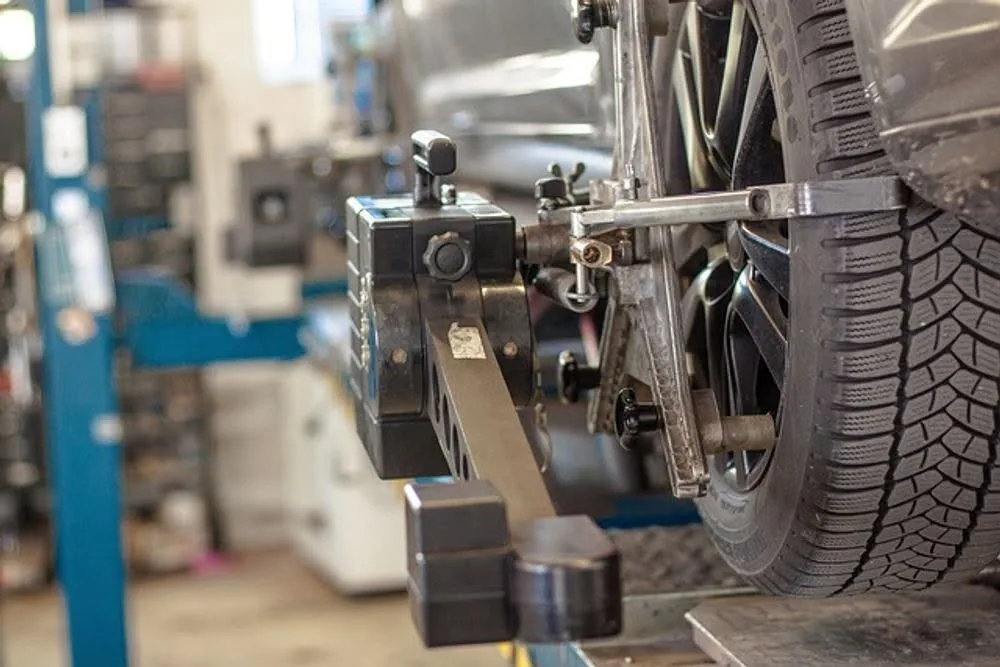
If you have to hold the steering wheel slightly off center to drive straight, the wheel alignment is likely off. New York roads are hard on alignment: a single hard pothole or curb strike can knock it out. A tire alignment service corrects the pull and stops the uneven wear that comes with it.
Vibration at highway speed
A vibration that shows up around highway speed, and often fades as you go faster or slower, usually points to tires that need balancing. As tires wear, small weight differences around the wheel become noticeable as a shake through the steering wheel or the seat. Tire balancing is a quick fix, and it is easier on your suspension parts than driving around with the vibration.
A tire pressure warning light
That horseshoe-shaped light with an exclamation point is your tire pressure monitoring system, or TPMS. It comes on when one or more tires is low on air, and it can also come on when a sensor needs attention. If you add air and the light will not go off, or it keeps coming back, a tire may have a slow leak or a sensor may need service. We service tire monitor systems on site, reset the sensors, and track down the leak that is setting off the warning.
Bulges, cuts, nails and slow leaks
A bulge or bubble in the sidewall means the inner structure of the tire has been damaged, often by a pothole. That tire should not stay on the car. A nail or screw in the tread is a different story: depending on where it is, flat tire repair is often possible. If you spot either, do not wait for the tire to go flat on the highway.
Low tread depth
Worn tread takes longer to stop and is much more likely to hydroplane on wet roads. A quick way to check at home is the penny test: put a penny into the tread with Lincoln's head pointing down. If you can see the top of his head, the tread is getting low and it is time to talk about replacement. Low tread is also one of the things checked during a NY State inspection.
What happens when you bring your car in
We keep the process simple so you know what is happening to your car and why.
- Inspection and diagnosis. We pull the wheels and inspect the pads, rotors, calipers, tire tread and pressure. If a warning light is on, we also service the tire pressure monitoring system and confirm the sensors are reading correctly.
- Straight talk on what is needed. Before any work starts, we explain exactly what we found and what it will cost. No surprise charges, and no upselling work your car does not need.
- The repair itself. Whether it is a brake pad replacement, new tires, or an alignment to correct pulling and uneven wear, we use quality parts and follow manufacturer specs on every job.
- Road test and final check. Every brake and tire job gets a road test before we hand back your keys, so we can confirm pedal feel, steering response and tire balance are where they should be.
There is always an owner on site to walk you through what we found and stand behind the work. That has been true since 1981.
Will independent service affect my warranty?
No. Federal law protects your right to have maintenance and repairs done at an independent shop without losing your factory warranty, as long as the work follows manufacturer specifications. We follow manufacturer procedures on every brake and tire job, so you keep your coverage and pay a fair, local price.
Simple habits that make brakes and tires last longer
- Check your tire pressure once a month, and before long trips. The correct pressure is on the sticker inside the driver's door, not the number on the tire sidewall.
- Rotate your tires on schedule. Every 5,000 to 7,500 miles is a good rule of thumb for most vehicles.
- Leave more space in traffic. Smooth, early braking is easier on pads and rotors than hard stops.
- Do not ignore a new noise. A squeal caught early is usually a pad job. The same squeal ignored for months can become pads and rotors together.
- Get an alignment check after a hard pothole hit, especially if the steering wheel is suddenly off center.
When to call us
If your car is grinding, pulling, vibrating, or throwing a tire pressure warning, do not wait for it to get worse. Walk-ins are always welcome, and with four bays running we are usually able to get to brake repair, flat tire repair and tire balancing the same day.
Stop by our shop at 578 S Broadway in Yonkers, Monday to Friday from 7am to 5pm, or call (914) 969-9023. We serve drivers across Yonkers, the Bronx, Riverdale, Westchester and New York City. You can learn more about our brakes and tire service, or schedule a visit online.